Chasing the Aurora at Point Roadknight, Victoria
Aurora Australis Photography | 20 January 2025
A few days after getting home from a road trip through South Australia and finally catching up on sleep, my aurora alert went off. Not ideal timing, but that is usually how aurora photography works. I skipped quite a few alerts last year, mostly due to fatigue or second guessing the conditions. This one, however, was forecast to have enormous potential, and something told me not to ignore it. So I loaded the car, grabbed the camera, and headed out.
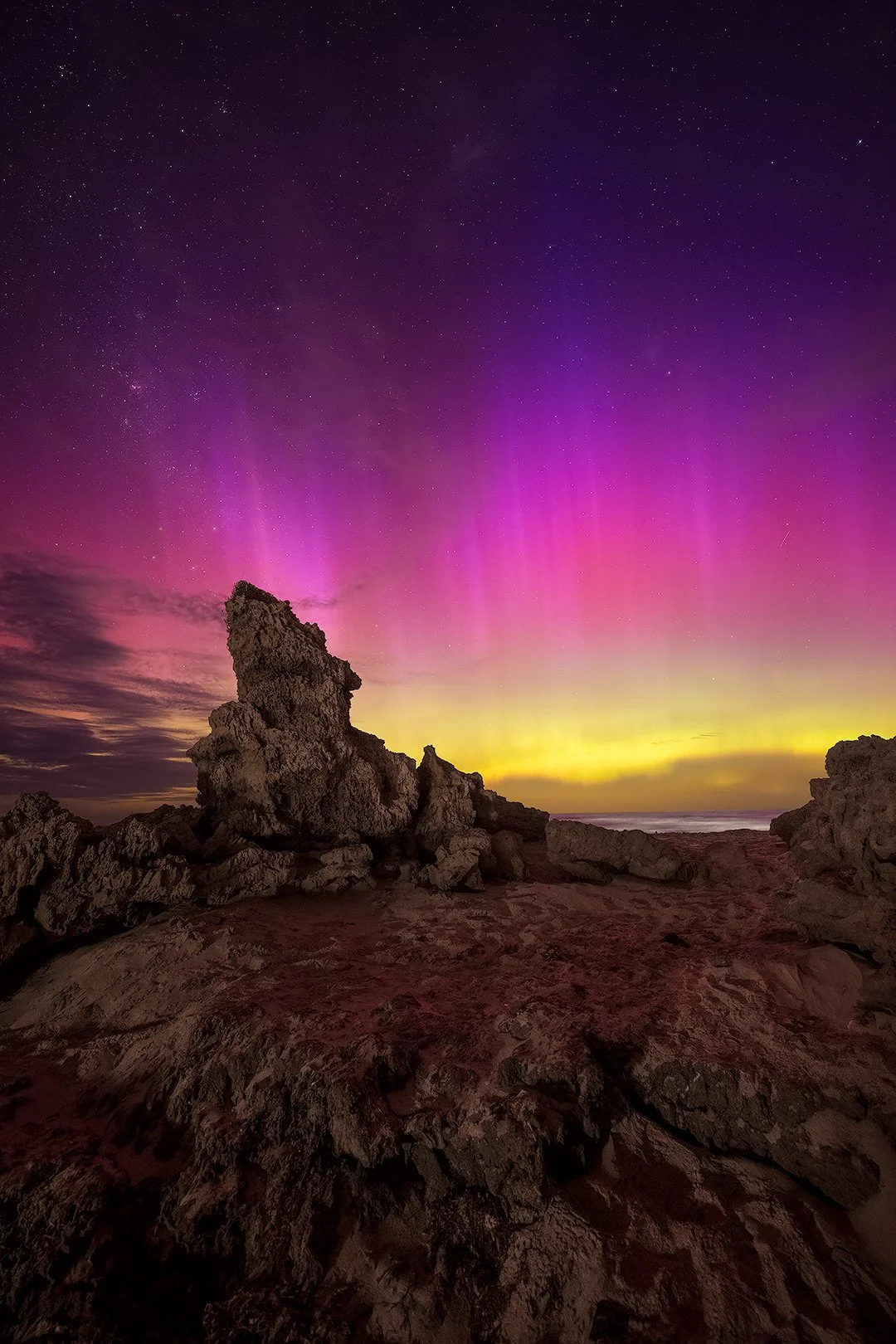
Aurora Over Point Roadknight
Jagged coastal rocks and red seaweed beneath a building Aurora Australis
Point Roadknight sits a few hours from home along the Victorian coast and has become one of my favourite locations for night photography. Photographing the aurora australis here is never simple, especially with the tide on the move, but that challenge is part of what makes it special. The point extends into the ocean, bordered by a plover nesting area, with sculpted rock formations rising straight through the sand. Standing out there at night feels like walking on another planet, one where the tide quietly reminds you who is really in charge.
With the tide coming in, I expected the area to stay fairly quiet, and it did. Unless you plan ahead with water shoes or tall gum boots, this is not a place to linger once the water starts moving. That limitation helped narrow my choices and forced me to commit to a composition early. I walked the point in low light, studying how the rock formations led the eye and how the shoreline framed the southern sky. Even before the aurora appeared, I had a clear vision of how I wanted the final image to feel.
When photographing the aurora, I always think in layers. Foreground first, then sky. I set up my tripod while there was still some ambient light, locking in the composition so the rocks anchored the frame and gave the scene scale. For the foreground, I exposed carefully to preserve texture without over-brightening the scene. Once that was set, it became a waiting game.
As the aurora began to build, I adjusted my camera settings to balance movement and detail. Exposures that are too long can blur the structure of the lights, while shorter exposures can lose colour. Aurora photography is a constant dance between shutter speed, ISO, and what the sky is doing in that moment. Nights like this reward patience and awareness far more than any preset ever could.
What struck me most was how quickly the fatigue disappeared once the aurora took hold. All the second guessing from earlier in the day faded away, replaced by that quiet focus that only seems to arrive under a dark sky. Listening to the alert and trusting the forecast was the key. Had I stayed home, I would have missed one of those rare nights where everything comes together.
By the time I packed up and made my way back along the beach, the tide had crept in far enough to make the exit feel slightly urgent. A final reminder that nature always sets the terms. Tired, salty, and very content, I drove home knowing it was absolutely worth it.
Thank you for reading. I hope this year brings you a few nights where you listen to the call, step outside, and spend some time under the stars.
This Aurora Australis panorama was photographed at Point Roadknight on Victoria’s coast during a rare high-energy aurora event.
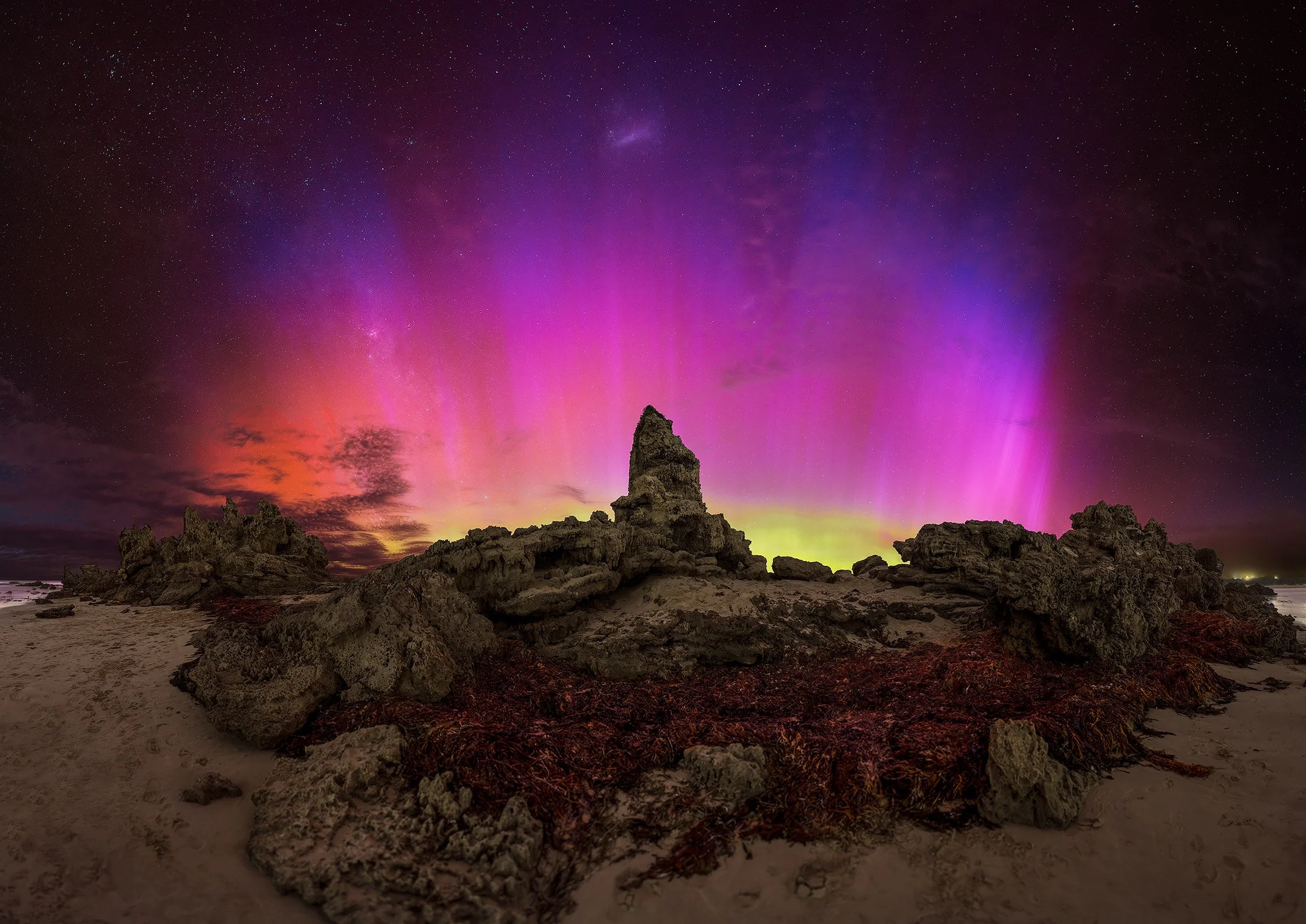
Panoramic Aurora Australis over jagged coastal rocks and red seaweed at Point Roadknight on Victoria’s coastline during a strong geomagnetic storm.